
Grand National Sweepstake
Your office sweep, sorted in minutes
Planning an April sweep at work? Use this guide to the Grand National sweepstake kit: the UK rules, the 2027 race facts, a step-by-step draw and fixes for non-runners.
In short
- A Grand National sweepstake kit is a rules sheet, runner list and draw slips for a fair office sweep.
- The race is at Aintree on Saturday 10 April 2027, with up to 34 runners over 30 fences.
- A work sweep must stay on one set of premises, sold face to face, with no profit.
Is an office sweepstake legal in the UK?
Yes, provided it is run the right way. A staff sweep on the big race counts as a work lottery under the Gambling Act 2005, which is one of the small lotteries that needs no licence. The conditions are strict, though, and a Grand National sweepstake kit that ignores them can turn a harmless office tradition into an unlawful lottery. Here is the checklist for Great Britain.
- Everyone involved, both the organisers and each person who buys a ticket, works on the same premises. A company with several sites cannot run one sweep across them.
- Nobody makes a profit. Money collected goes to prizes and reasonable running costs, or the whole sweep is run for a cause rather than for private gain.
- You may advertise only inside the workplace itself, never by sending notices to other buildings.
- Every entry costs the same, and it is paid before the ticket or horse is handed over.
- Entries are sold face to face by the organisers or on their behalf, and tickets cannot be passed on to someone else.
- No rollover: prizes from this sweep are not carried forward to fund a later one.
Because tickets must be sold in person, an email round-robin or a payment app group chat is the wrong tool. Remote colleagues, friends from the pub and strangers do not qualify, and a sweep run among them is outside the exemption. The Gambling Commission does not publish a fixed cap on running costs for Great Britain, so keep them tiny and be ready to show what was spent.
Northern Ireland follows a different law, the 1985 Order, not the 2005 Act. Its conditions for a private lottery include a £1,000 limit on the total value of tickets and a cap of 10% of takings on expenses, with prizes excluded from that figure. Tickets must show one fixed price, and written advertising is limited to a notice at the workplace.
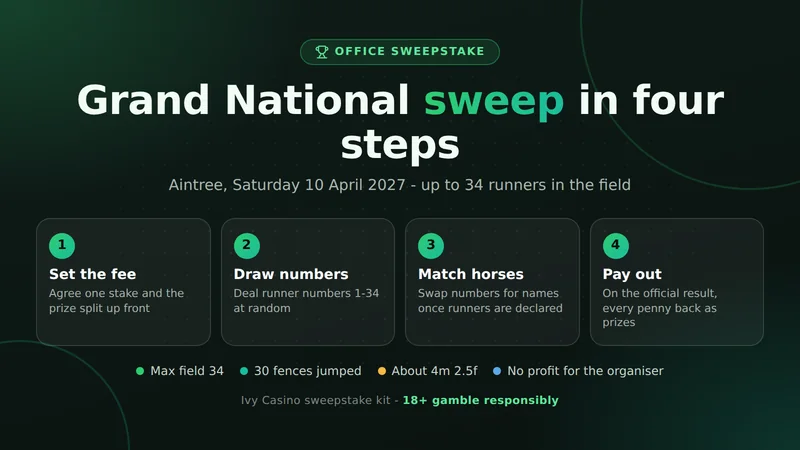
Grand National 2027: the facts your sweep needs
Before you print anything for your sweepstake kit, get the race details straight, because the number of runners decides how many horses go in the hat. The main race takes place at Aintree, near Liverpool, as part of a three-day festival. The start time for 2027 has not been announced, so check the racecard nearer the day.
Swipe to see the full table
| Detail | Fact |
|---|---|
| Course | Aintree |
| Race day | Sat 10 April 2027 |
| Festival | 8-10 April |
| Runners | 34 maximum |
| Fences | 30 jumped |
| Distance | About 4m 2.5f |
The field is capped at 34 runners, and both of the last two runs had a full field. The marathon distance is two circuits, with 16 different fences and 14 of them jumped twice, which gives the 30 jumps. Plenty of horses fall or pull up, so many sweeps hand out prizes for first, second, third and sometimes the last horse home.
The two most recent winners are good trivia for the sweep sheet. Nick Rockett won in April 2025 at 33/1, trained by Willie Mullins and ridden by his son Patrick, an amateur. I Am Maximus took the 2026 race as the 9/2 favourite under Paul Townend, also for Mullins, after winning it in 2024 as well.
How to run an office sweepstake step by step
A Grand National sweepstake kit is nothing more than a few printed sheets, a pot of slips and a clear set of house rules. The steps below take a morning to set up and about ten minutes on draw day. Follow the order, because most disputes start when a step is skipped.
-
1
Agree the rules in writing
Fix the stake, the closing date, the prize split and what happens to a non-runner. Put it on one printable sweepstake sheet and pin it up at work, which doubles as your only permitted advert.
-
2
Set one stake for everybody
Pick a round sum such as £2 or £3 and charge every person the same. Lower stakes keep it social and make the budget easy to explain.
-
3
Collect cash face to face
Take payment in person and tick the name off the list at once. Hand over the horse only after the money is in your hand, never on a promise.
-
4
Wait for the declared runners
The final field is confirmed shortly before the race. Draw from that list, not from an early entry list, so you do not hand out horses that will never run.
-
5
Draw the horses in the open
Write each runner on a slip, fold them and pull them one at a time while entrants watch. Record each match on the sheet and let people photograph it.
-
6
Pay out and publish the result
Check the official result, work out the prizes and pay winners promptly. Post the final list and the prize amounts so anyone can check the sums.
Sweepstake Checklist and Draw
Tick off the checklist as you set things up. On draw day, put this page on a screen in the office, type the names of everyone who paid in and press the button while they watch: each name gets a runner number at random. Once the final declarations are out, swap the numbers for horse names on your printed sheet.
Organiser checklist 0/8
Random draw
Runners are dealt out evenly: if there are more runners than people, some people get two.
Common mistakes with a work sweep
Most sweeps go wrong in small, avoidable ways rather than through anything dramatic. These are the slips that cause arguments in the canteen on Monday morning.
Opening it to outsiders
Letting in friends, family or the pub crowd breaks the same-premises condition. Keep it to people who actually work in your building.
Taking a cut
Keeping a bit for yourself, even as a thank you for organising, is profit. Spend leftovers on the prizes or give them to a charity.
Drawing too early
Matching names to horses before the declared field is known leaves entrants holding runners that may be withdrawn.
Unequal stakes
Charging one colleague £2 and another £5, or giving a discount, breaks the equal price rule. Everybody pays the same.
Chasing money after the race
Payment comes first. If someone has not paid by the draw, they are simply not in, and no horse should be held for them.
No written rules
Unwritten rules lead to disagreements about ties and withdrawals. A single sheet agreed in advance settles nearly every dispute.
What office organisers and players say
Ask people who run the April sweep why they keep doing it and the answers are remarkably similar. Organisers often say it is the cheapest team-building exercise going: a couple of pounds, ten minutes and the whole floor is talking about the same thing. Colleagues who never speak across departments end up comparing horses and swapping predictions.
Players like that the stakes are small and the result needs no skill, so a newcomer has the same chance as the long-serving race fan. Many mention the draw itself as the best part, with the room crowding round the hat and cheering or groaning as each name comes out. People who draw a long shot still enjoy following it round the course.
Organisers also tend to praise a tidy printed sheet in the sweepstake kit. When the rules, the prize split and the order of the draw are all clearly displayed, the whole thing runs smoothly and nobody feels short-changed. The most common comment after the race is that the sweep made an ordinary Saturday feel like an occasion, even for people who do not usually watch racing.
Keep it light. The pleasure of a sweepstake is in the draw and the shared watching, so choose a stake that nobody will miss and resist the urge to raise it year on year.
What to do if the sweep did not go to plan
Things go awry on race day, and a few rules decided in advance mean you never have to improvise. Here are the usual problems and the fair way to handle each.
A horse is a non-runner
If the withdrawal comes before the race, the usual fix is a reserve slip drawn from the leftover pool, or a refund of that stake. Whichever you choose, state it on the sheet beforehand. A horse that starts and falls still counts as a runner.
Fewer entrants than runners
Let paid-up players take a second horse at the same price, or run a half-field sweep with only the shortest and longest-priced horses. Do not keep spare horses for yourself, as winning on them would be private gain.
Someone did not pay
No payment means no horse. Return their slip to the hat if the draw has not happened. If it has, redraw only that horse among the paid entrants, and tell everyone you did it.
A dead heat
Share the relevant prize equally between the holders. Put the split rule on the sheet before the draw so a tie never needs a debate.
The race is abandoned or void
Refund every stake in full, since nobody has won. Agree this rule beforehand, and do not roll the money into next year, as rollovers are not allowed.
A dispute over the result
Go by the official result and the written sheet. Show the draw record, and ask an impartial colleague to check the sums if tempers rise. Prize ideas such as 50% first, 30% second and 20% third are easy to explain.
A word on the difference from betting. In a sweepstake nobody chooses a horse, and the draw gives everyone an equal chance, which is why it counts as a lottery. A bet is a stake placed on a runner you picked yourself. Keep the two apart.
Between race days
Once the sweep is settled, there is nothing to do until next April. If you fancy something to fill the gap, Ivy Casino has slots and live tables, with the games lobby and a full roulette page to browse. New players can claim a 25% deposit match up to £50 on their first deposit, with a £20 minimum, 10x wagering and 28 days to complete it; the full bonus terms are worth a look first. Sports betting is not part of Ivy Casino itself: the brand runs its sportsbook on a separate site.
Gambling should stay a pastime. Set limits before you start, never chase losses, and if it stops being fun, visit our responsible gambling page for support and tools. You must be 18 or over.
Sweepstake Questions
What is a Grand National sweepstake kit?
It is the set of items you need to run the sweep: a rules and prize sheet, a list of declared runners, slips to draw from and a tally of who paid. Some people print a ready-made pack, others make their own. The widget on this page includes a checklist and a random runner draw.
How many runners are there?
The Grand National field is capped at 34 runners, and that number started in both of the last two races. The final list is confirmed shortly before the race, so wait for the declared runners before you draw. Fewer than 34 means fewer slips in your hat.
What happens to a non-runner in the sweep?
Decide before the draw. The common options are to draw a reserve for the person left without a horse or to refund their stake. Put the choice on the printable sweepstake sheet. If a horse starts the race and falls, it still counts as a runner.
What are good prize split ideas?
A simple split pays 50% to the first horse, 30% to the second and 20% to the third. Others add a small prize for the last finisher or for the favourite. Whatever you choose, all takings must go back out as prizes or reasonable costs.
Is a sweepstake the same as betting?
No. A sweepstake draws horses at random, with everyone paying the same stake into one pool, and it is treated as a lottery. Betting means choosing your own selection at odds. A work sweep is legal if it meets the conditions in the rules above.
Can we run the sweep by email or in the pub?
Not under the work lottery rules. Entries must be sold face to face, and every entrant must work on the same premises. That rules out email entries, remote colleagues and pub groups. Northern Ireland has separate conditions, including a £1,000 limit on total ticket value.
Fancy a Flutter of a Different Kind?
Between race days, Ivy Casino has slots, live tables and a welcome offer for new players.
Reviewed by Sarah Thompson, Casino industry analyst Published 19 Oct 2026 Last updated 19 Oct 2026 Checked 19 Oct 2026